Do you have existing conduit?
First of all, it’s important to know that an electric line and an internet line cannot be installed in one conduit. They have to be separate. A phone line and internet line can share a conduit.
If your existing telephone and/or internet line is underground, one of our technicians will need to evaluate whether your existing conduit can be used to install our fiber optic line. If the answer is “yes,” you’re all set!
If not, go to our Zero Cost Internet Installation Program (ZIIP) page to learn how to sign-up to get a new conduit and fiber-optic line to your building free! The program began in March of 2026.
If you’d like to hire someone to put your conduit in, or do it yourself, it may speed up the process of getting connected.
Hiring a Contractor Yourself
NEK Broadband follows all applicable National Electrical Safety Code standards, as well as manufacturer specifications for telecommunications cable, equipment, and systems. Therefore all conduits not installed by NEK Broadband technicians must also comply.
Here is a list of contractors who indicate they are qualified. NEK Broadband is providing this list as a convenience to building owners. Contractors have not been vetted so NEK Broadband makes no representation about the capability, quality, or pricing of these contractors.
Contractors willing to do underground conduit installations:
The following contractors have expressed an interest in performing underground work. NEK Broadband is providing this list as a convenience to premises owners. It is not a list of “recommended or vetted contractors” and so NEK Broadband makes no representation about the capability, quality, or pricing of these contractors. It is the building owner’s responsibility to ensure all work is performed in accordance with our specifications. As always, if you or your selected contractor have any questions, please contact NEK Broadband.
|
Name |
Location |
Phone |
|
Website |
|
EXCAVATION PLUS LLC |
Island Pond, Vermont |
802-673-6698 |
|
|
|
Brandon Phillips/Kingdom Lawncare |
Newport, Vermont |
802-274-4389 |
|
|
|
DR Property Maintenance & Lawn Care |
Hardwick, Vermont |
802-793-7388 |
||
|
Isaac Excavating |
West Charleston, Vermont |
802-505-0550 |
|
|
|
Josh Fenoff Site Works |
Waterford, Vermont |
802-535-7941 |
||
|
K. Bellavance Landworks & Hauling |
Barre, Vermont |
802-279-8488 |
||
|
Triple B Services |
Kirby, Vermont |
802-384-9701 |
|
|
Do It Yourself Instructions
If you want to dig the trench and install the conduit yourself, here are the instructions.
Underground Electrical PVC Conduit for Fiber Optic Cable
We require that a conduit meets all national standards for installation.
Before You Begin
Before starting, you need to have a technician from NEKCV (NEK Broadband and CVFiber) mark off the distance and path for the trench between our line on the nearest utility pole and the entrance to the residence or building.
If this distance is over 400 feet, you will need to install additional parts so the fiber installers can pull the drop cable through the conduit. Contact us at 802-424-1570 for more information on this.
Materials – Photos of exact type of some materials are below instructions
- Wooden Stakes
- Mason’s cord or heavy twine
- Trenching shovel
- Electrical pull tape (mule tape)
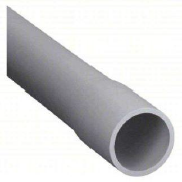
- 1½” Schedule 40 electrical polyvinyl chloride conduit (PVC) for the run plus verticals at ends
- Multiple 1½” PVC conduit couplings
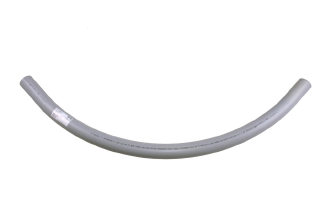
- 2 – 1½” PVC 90 degree long sweep elbows (See Special Requirements below.)
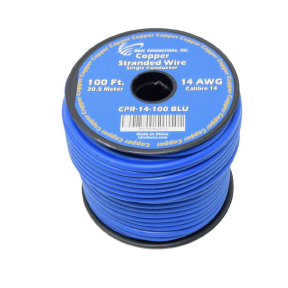
- Enough 14 gauge copper wire for the entire run (usually sheathed, but bare wire can be used)
- PVC pipe cutter or a saw
- PVC pipe primer/cleaner
- PVC pipe cement
- Electrical tape
Special Requirements for Fiber Optic Line
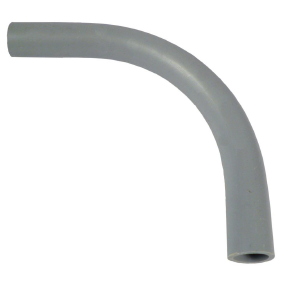
A fiber optic line has glass tubes inside the casing versus solid electrical wire. If you install a regular 90 degree PVC elbow at each end, the line could easily be damaged and would be expensive to replace.
Long Sweep Elbows
You must use PVC 90 degree long sweep elbows at each end. No trench should have a 90-degree turn.
A typical cable to your specific location is 4.5mm thick. That means it should not be bent more than a 40.5mm radius at any point. Using the long sweep elbow means the fiber line will not have to bend beyond its safe limit when it’s being installed in the conduit at the utility pole and then again at the building.
Starting the Project
Do not begin work until you have the local permit, if required, have contacted Dig Safe and your underground utilities have been flagged.
Step 1
- Apply for an electrical permit from your municipality’s building permits department, if required in your area, before beginning the installation.
- Contact DigSafe to locate any other underground utilities on your property. It is free.
- Call 811 or request a Dig Safe ticket online with Exactix.
- Dig Safe will contact telephone, cable, and power utilities, then a technician will come out and mark underground cables, gas lines and/or water lines with small flags or temporary ground paint.
They are tasked to complete this 48 hrs after opening a ticket. It’s a good idea to contact DigSafe about 4 days before you start your project.
Next Steps
- Lay out the route the underground fiber conduit is to follow by driving stakes into the ground at intervals. Then connect the stakes with Mason’s cord or heavy twine.
- Dig a trench alongside your cord (to keep it straight) that is at least 18 inches deep, and 12 inches wide. The National Electrical Code requires that underground PVC conduit be covered by at least 18 inches of dirt when installed on private property National Electrical Code Table 300-5.
- Lay the PVC conduit pipes beside the trench and cut the final piece to length using the PVC pipe cutter. If you do not have a cutter any plastic cutting saw will work.
- Place the conduit in the trench before gluing them together.
- Run the mule tape (pull tape) through the pipes. Leave about 14 inches extra tape hanging out on each end so it is long enough to tie to another pull string of fiber. It will be used by the NEKCV crew to pull the fiber optic line through your conduit.
- Doing this before gluing pipes together makes it easier to pull tape through because the pipes are shorter.
- How to join the straight PVC pipes together and glue them.
- Apply PVC cleaner/primer to the ends of the conduits and the entire inside of one coupling. While the cleaner/primer is still wet, apply a liberal coating of PVC cement the same way.
- Slip the ends of the conduits into the coupling until they touch in the middle of the coupling. Twist the joint back and forth several times and then let it set for 2 to 3 minutes before moving on to the next joint.
- Attach one long sweep 90 (the curved PVC pipe) to each end of the straight PVC pipe using PVC cleaner/primer and PVC cement. Attach short lengths of PVC conduit to each long sweep 90 so the PVC pipe conduit will extend 4 feet above ground level when the trench is filled in.
- Lay the 14 gauge wire in the trench alongside your PVC conduit. This will make it easier for survey companies to locate the fiber in the future since there is no metal in the fiber line.
If you need a permit
Before you fill in your trench, call the building department and request the required inspection. After the inspector gives approval, fill in your trench. Make sure to cover the tops of both conduit ends with some electrical tape to keep out any water and critters.
Diagrams
Picture 1 PVC conduit
Picture 2 long sweep 90
Picture 3 regular 90
Picture 4 mule tape. This is the kind of tape used to pull the fiber line through the conduit.
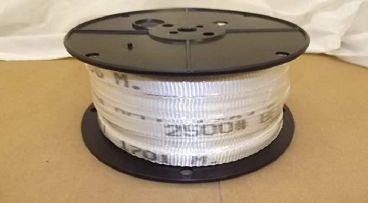
Picture 5 14 gauge wire (any color but MUST BE COPPER) This wire is laid in the trench to help locate your fiber in the future since the fiber line isn’t metal.